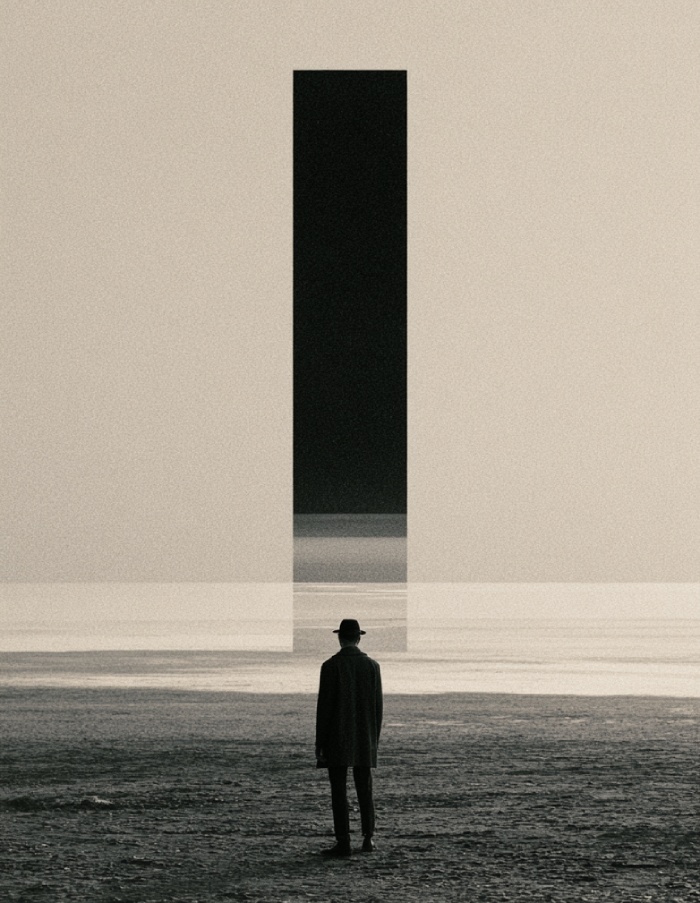
How often do we tell ourselves, we need more clarity before we make a move.
We want to understand where something is going before we commit to it. We want to know the decision is the right one, that the risk will be worth it, and ideally that we won’t regret it six months from now. I’ve done this plenty in my own life. I can spend a lot of time thinking through a decision and convince myself that I’m simply being thoughtful and responsible, when sometimes what I’m really trying to do is remove all uncertainty before I act.
And that life rarely gives us that kind of certainty.
Some of the most important decisions we make happen before we completely understand where they are going to lead. In fact, I think a lot of clarity comes after we begin moving, not before.
We take a step, reality gives us new information, and from that new position we can see things that were impossible to see while we were standing still.
When Thinking Becomes Avoidance
There is obviously value in thinking things through. I’m not suggesting we make impulsive decisions about everything or start blowing up parts of our lives because we feel restless. But there is a point where reflection stops helping us and starts protecting us from having to make a decision.
That line can be difficult to recognize because overthinking often looks responsible from the outside. You can research something for months, talk to ten different people, create another plan, and tell yourself you’re still gathering information. Eventually, though, you reach a point where the information you actually need can only come from making a move.
Imagine you’re considering changing direction in your work. You can spend months wondering whether the idea will work, whether people will respond to it, or whether you’ll even enjoy doing it. There is value in doing your homework, but eventually another month of thinking isn’t going to answer those questions. Testing the idea will.
And that is where things get uncomfortable, because once you act, reality gets involved. The idea can fail. Somebody can say no. You can discover that the thing you thought you wanted isn’t actually what you want at all.
As long as you stay in your head, none of that has happened yet. Every possibility remains open.
Sometimes what we call waiting for clarity is really just waiting for certainty, and certainty is usually not coming.
Movement Gives You Information
Sport taught me this long before I had language for it.
You can prepare, visualize, study an opponent, and create a game plan, but eventually you have to step onto the court. Once the game starts, you begin receiving information you could never have gathered from the sidelines. Maybe the strategy you thought would work doesn’t. Maybe something you worried about turns out not to matter at all. You respond to what is actually happening rather than what you imagined might happen.
Life works in much the same way.
The first move doesn’t need to solve the entire problem. It only needs to teach you something useful. Maybe you test the new business idea for thirty days instead of trying to decide whether you want to spend the next ten years doing it.
Once you move, you have better information. From there, you can adjust.
Getting comfortable with the unknown is a skill in itself. I’ve changed direction plenty of times. There have been decisions I thought were taking me toward one outcome that ended up opening a completely different door. Looking back, I couldn’t have planned those turns because I didn’t have access to that information yet.
I had to get there first.
You’re Allowed to Adjust
I think part of the fear around making a decision is that we treat it as though we are signing a contract with our future self. If we choose something, we feel like we now have to prove it was the right choice.
But changing direction isn’t necessarily evidence that you made a bad decision. Sometimes the decision did exactly what it needed to do: it moved you into a position where you could finally see more clearly.
You may start something and realize it doesn’t fit. You may pursue an opportunity and discover that you don’t want the life attached to it. You may have the conversation and learn something that completely changes your perspective.
That isn’t wasted movement. That’s information you couldn’t have accessed by thinking harder.
For me, this is where real confidence starts to look different. Confidence isn’t knowing everything is going to work out the way I want. It is trusting that I can make the best decision available to me, take responsibility for it, and respond to whatever I learn along the way.
There is a big difference between trusting the outcome and trusting yourself.
You Only Need the Next Part
Most of us will never have the whole map. Life changes too quickly, other people make their own decisions, and we are constantly learning things about ourselves that alter where we want to go.
What we usually do have is enough information for the next move.
That may be all clarity is supposed to give us.
You don’t need to know exactly where the road ends before you begin walking down it. You need enough awareness to know which direction feels true, enough agency to take the next step, and enough humility to change course when life shows you something you couldn’t see before.
Clarity doesn’t arrive while you’re standing still trying to figure everything out.
Sometimes clarity is what you find once you finally start moving.
Written By

Ahren Cadieux
Ahren is the Co-Founder of The Balanced Man, and is passionate about exploring mindset, personal growth, and the power of brotherhood.